
Category: Workplace Readiness

  • What If Common Sense Had a Structure?

    What If Common Sense Had a Structure?

    How Workplace Readiness Training Turns Everyday Expectations into Practical Professional Skills

    We’re Not Reinventing the Wheel

    How often have supervisors, managers, or staffing professionals found themselves asking:

    “Why doesn’t this employee understand something that should be common sense?”

    Perhaps an associate fails to communicate an absence properly. Another struggles to accept constructive criticism. A third allows a minor disagreement with a coworker to escalate into a workplace conflict.

    These situations can frustrate supervisors, disrupt operations, and sometimes jeopardize otherwise promising employment relationships.

    But consider another question:

    What if the problem isn’t always a lack of common sense, but the absence of a structured approach to understanding and applying it?

    That’s the premise behind the Rayford Dynamic Services Workplace Readiness approach.

    We’re not reinventing the wheel.

    We’re taking familiar principles of professional behavior and organizing them into a structured workplace readiness training framework designed to help employees understand expectations, evaluate situations, and make better workplace decisions.

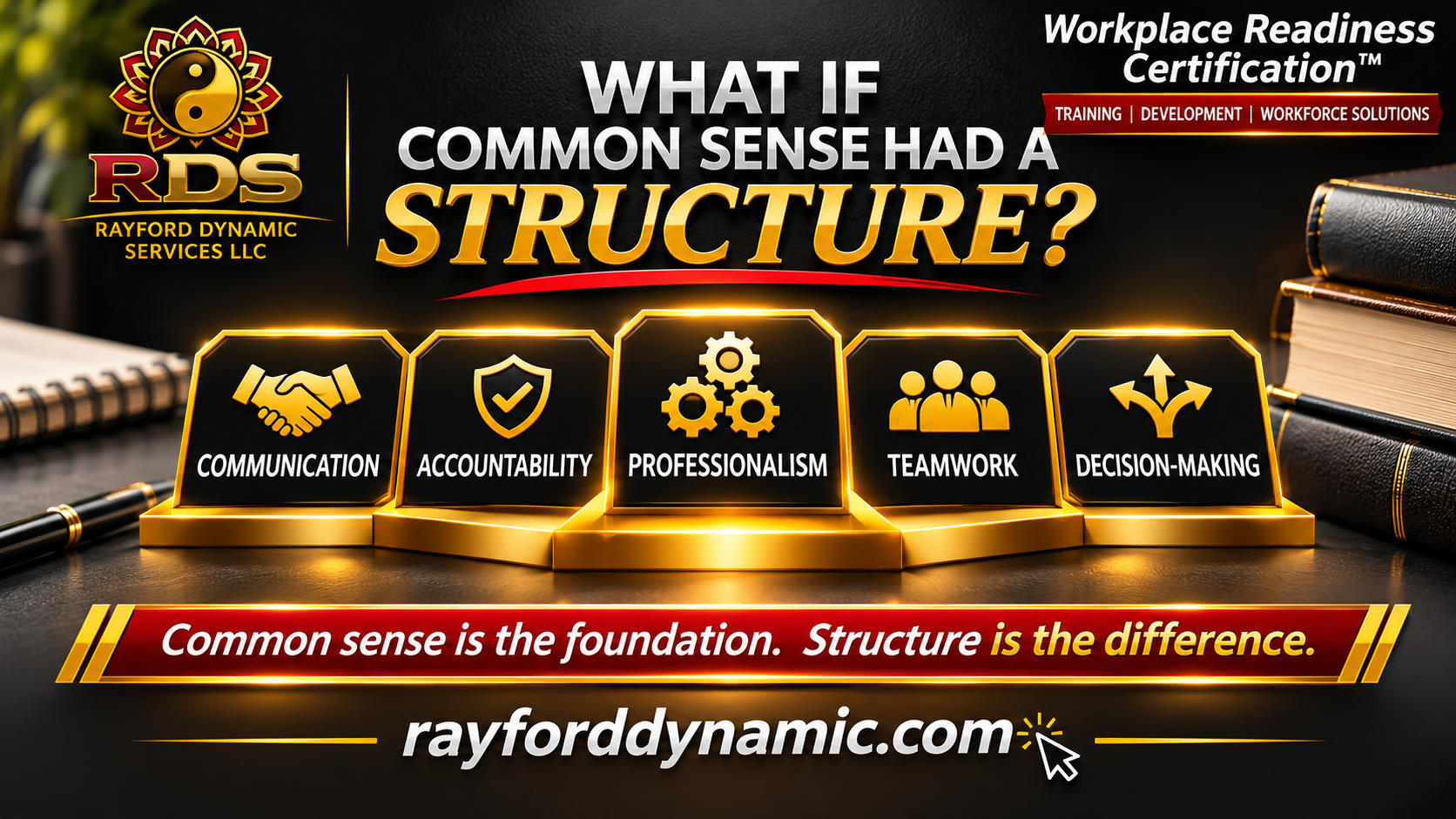
    Common sense is the foundation. Structure is the difference.

    Why Workplace Readiness Training Matters

    Organizations invest significant time and resources in recruiting, screening, hiring, and training employees.

    Yet workplace behavior is often addressed primarily through policies, orientation sessions, and supervisory instructions.

    Employees may be told to demonstrate professionalism, communicate effectively, take responsibility, and work well with others.

    But understanding these expectations in principle doesn’t necessarily mean knowing how to apply them in challenging situations.

    Consider an employee who receives conflicting instructions from two supervisors.

    Or an associate who believes a coworker is treating them unfairly.

    Or a temporary employee who encounters an unexpected scheduling problem.

    Each situation requires more than simply knowing that professionalism matters.

    It requires judgment, communication, accountability, and an understanding of appropriate responses.

    Workplace readiness training helps turn these expectations into practical skills that employees can examine, practice, and apply.

    From Common Sense to Consistent Workplace Behavior

    The Rayford Dynamic Services approach begins with a straightforward principle: many of the behaviors associated with workplace success are already familiar to us.

    Showing respect. Being dependable. Communicating clearly. Accepting responsibility. Working cooperatively with others.

    These are not new concepts.

    The challenge is that individuals may understand these principles differently, particularly when facing unfamiliar expectations, workplace pressure, or interpersonal disagreements.

    That’s where structure becomes important.

    The Workplace Readiness Certification™ Manual organizes essential professional behaviors into a structured educational framework. Rather than relying solely on general advice, it encourages individuals to examine realistic workplace situations, consider their choices, and understand the consequences of their actions.

    For example, an employee may know that communication is important. But what should that employee do when instructions are unclear, a deadline cannot be met, or a disagreement develops with a supervisor?

    Structured workplace readiness training provides opportunities to explore these situations before they become actual workplace problems.

    The objective is not simply to teach people what professional behavior looks like.

    It is to help them recognize when and how to apply it consistently.

    What This Means for Employers and Staffing Agencies

    For employers and staffing agencies, workplace readiness is more than an individual employee development issue. It can also influence operational stability, customer relationships, and workforce performance.

    Staffing agencies face a particular challenge. Their responsibility extends beyond identifying qualified candidates and filling open positions. They must also consider whether associates are prepared to meet workplace expectations and represent the agency professionally.

    An associate may possess the technical skills required for an assignment but still struggle with attendance, communication, accountability, or interpersonal relationships.

    When these challenges arise, the consequences can extend beyond the individual employee. Supervisors may spend additional time addressing problems, assignments may be disrupted, and relationships between staffing agencies and their clients may be strained.

    A structured workplace readiness program offers an additional resource for addressing these concerns.

    For staffing agencies, it can provide a foundation for preparing candidates before placement and reinforcing professional expectations throughout an assignment.

    For employers, it can complement onboarding, supervisory coaching, and employee development initiatives.

    For employees, it can provide practical guidance for understanding workplace expectations, responding appropriately to challenges, and building habits that support long-term career development.

    The goal is not to suggest that training alone will eliminate workplace behavior problems.

    Rather, it is to provide a more organized, consistent approach to helping individuals understand and apply the professional behaviors that organizations expect.

    The RDS Workplace Readiness Approach: From Education to Application

    The RDS Workplace Readiness approach is designed to move beyond simply discussing professional behavior. Its purpose is to provide an organized educational foundation that individuals and organizations can use to develop practical workplace skills.

    The published Workplace Readiness Certification™ Manual serves as the foundation of this approach. It brings together essential principles of workplace professionalism, communication, accountability, teamwork, and decision-making in a structured learning format.

    For employers and staffing agencies, the manual can serve as a resource for employee preparation, onboarding support, and ongoing professional development.

    RDS is also developing opportunities to bring these principles into workplace settings through presentations, interactive workshops, and on-site seminars.

    These sessions can be tailored to explore practical challenges such as workplace communication, attendance expectations, professional conduct, conflict resolution, and individual accountability.

    The goal is to help participants connect familiar principles with realistic situations they may encounter on the job.

    An online Workplace Readiness Certification™ examination is also being prepared as an additional component of the RDS program. Once launched, it will provide participants with an opportunity to demonstrate their understanding of the material through a formal assessment.

    For organizations interested in exploring workplace readiness education now, the published manual provides an immediate starting point, while discussions about potential workshops and seminars can begin before the certification examination becomes available.

    The larger objective is to create a practical connection between learning, workplace expectations, and consistent professional behavior.

    Put Workplace Readiness Into Practice

    Workplace success requires more than technical qualifications. It requires employees who understand professional expectations and can apply sound judgment, effective communication, and personal accountability in everyday situations.

    At Rayford Dynamic Services LLC, we believe these behaviors can be strengthened through education, practical examples, and a structured approach to workplace readiness.

    Whether you’re an employer seeking to strengthen workforce performance, a staffing agency preparing candidates for successful assignments, or an individual investing in professional development, workplace readiness deserves attention.

    Explore the RDS Workplace Readiness Certification™ Manual and learn more about our approach at rayforddynamic.com.

    Employers, staffing agencies, and workforce development organizations interested in discussing educational resources, presentations, or future workshops are invited to contact Rayford Dynamic Services LLC.

    Common sense is the foundation. Structure is the difference.

  • Workplace Readiness Is More Than Getting Hired

    Workplace Readiness Is More Than Getting Hired

    Workplace readiness begins before a person is hired. It begins with preparation—understanding what employers expect, strengthening professional behaviors and work habits, and learning how to communicate, respond, and present yourself effectively before the interview ever takes place. Interviewing effectively and getting the job are important milestones, but workplace readiness helps prepare an individual to earn the opportunity, succeed after Day One, and continue to grow and advance.

    Navigating Workplace Expectations and Culture

    Employers often hire based on a combination of qualifications, experience, potential, and how a candidate presents during the selection process. But once an individual enters the workplace, another set of expectations becomes increasingly important. Every organization has its own culture, leadership style, expectations, and challenges, and some workplace environments can be more difficult to navigate than others.

    RDS does not assume that every workplace will be the same—or ideal. Instead, the RDS Workplace Readiness philosophy emphasizes transferable behaviors such as reliability, communication, accountability, professionalism, adaptability, safety awareness, teamwork, and responding professionally to supervision. These behaviors can help individuals navigate different workplace cultures while increasing their ability to contribute, adapt, strengthen their employability, and position themselves for growth and advancement.

    Technical Skills Are Only Part of Workplace Success

    Technical skills may help an employee perform the tasks of a job, but technical ability alone does not ensure workplace success. An employee can be highly capable and still struggle because of poor attendance, weak communication, resistance to feedback, difficulty working with others, or a failure to understand professional expectations. These behaviors are sometimes described as “soft skills”, but their impact is anything but secondary. They are workplace behaviors that can directly affect performance, relationships, retention, and opportunities for advancement.

    This is why workplace readiness should not be treated as something an individual addresses only after problems occur. Preparation can begin before the interview, continue through onboarding, and develop throughout a person’s career. Understanding expectations in advance helps individuals recognize their strengths, identify behaviors that may need improvement, and enter the workplace better prepared to make the adjustments that employment and career growth may require.

    Workplace Readiness Supports Employee Development and Retention

    Workplace readiness also benefits the organizations that hire, place, train, and develop people. When expectations are communicated early and individuals are better prepared to meet them, employers and workforce partners can reduce avoidable misunderstandings, strengthen onboarding, support retention, and spend more time developing employees rather than repeatedly addressing preventable behavioral issues.

    The same principles apply to individuals who are already employed. An employee may possess valuable technical skills, experience, and organizational knowledge while struggling with behaviors that may place continued employment or advancement at risk. In these situations, workplace readiness can serve as a developmental resource for employees who are willing to improve, while giving employers another avenue to strengthen performance and retention before valuable employees are lost to preventable behavioral issues.

    At the same time, workplace readiness does not remove personal responsibility. Employers can provide training, supervision, resources, and opportunities, but individuals must be willing to learn, adapt, and improve. The RDS approach is designed for individuals who want to strengthen their chances of workplace success. Preparation becomes most valuable when an individual recognizes that professional growth requires both opportunity and personal initiative.

    The goal is not simply to help an individual remain employed. Workplace readiness should also help individuals understand how everyday behaviors can influence trust, responsibility, visibility, and future opportunity. Employees who consistently demonstrate reliability, professionalism, effective communication, adaptability, and a willingness to learn are better positioned to take on greater responsibility and pursue growth when opportunities become available.

    Benefits Beyond the Workplace

    The benefits of workplace readiness can also extend beyond the workplace. Skills and behaviors such as communication, accountability, time management, adaptability, problem-solving, emotional self-management, and following through on commitments can strengthen both professional and personal effectiveness.

    Likewise, greater organization, responsibility, and self-management in daily life can positively influence how an individual approaches work. RDS views workplace readiness not as an employer reaching into a person’s private life, but as the development of practical behaviors that individuals can carry with them wherever greater responsibility, better decisions, and personal growth are important.

    This is the foundation of the RDS Workplace Readiness philosophy: preparation should begin before workplace problems develop and, whenever possible, before employment begins. The objective is not to guarantee that every individual will succeed in every organization. It is to provide practical knowledge, behavioral awareness, and tools that individuals who want to improve can use to better prepare themselves for the interview, Day One, the realities of the workplace, and the opportunities that may follow.

    Getting hired matters, but preparation for workplace success begins before the hiring decision is made. Developing greater awareness of professional expectations, communication, behavior, and personal responsibility can also reinforce the skills and confidence needed to interview effectively and present oneself as a prepared candidate.

    The greater objective is to earn the opportunity, enter the workplace prepared to contribute, navigate its challenges, continue learning, and build a foundation for retention, growth, and advancement. That is why RDS believes workplace readiness begins before the interview, prepares individuals for Day One, and continues well beyond it.

  • Workplace Readiness Begins Before Day One

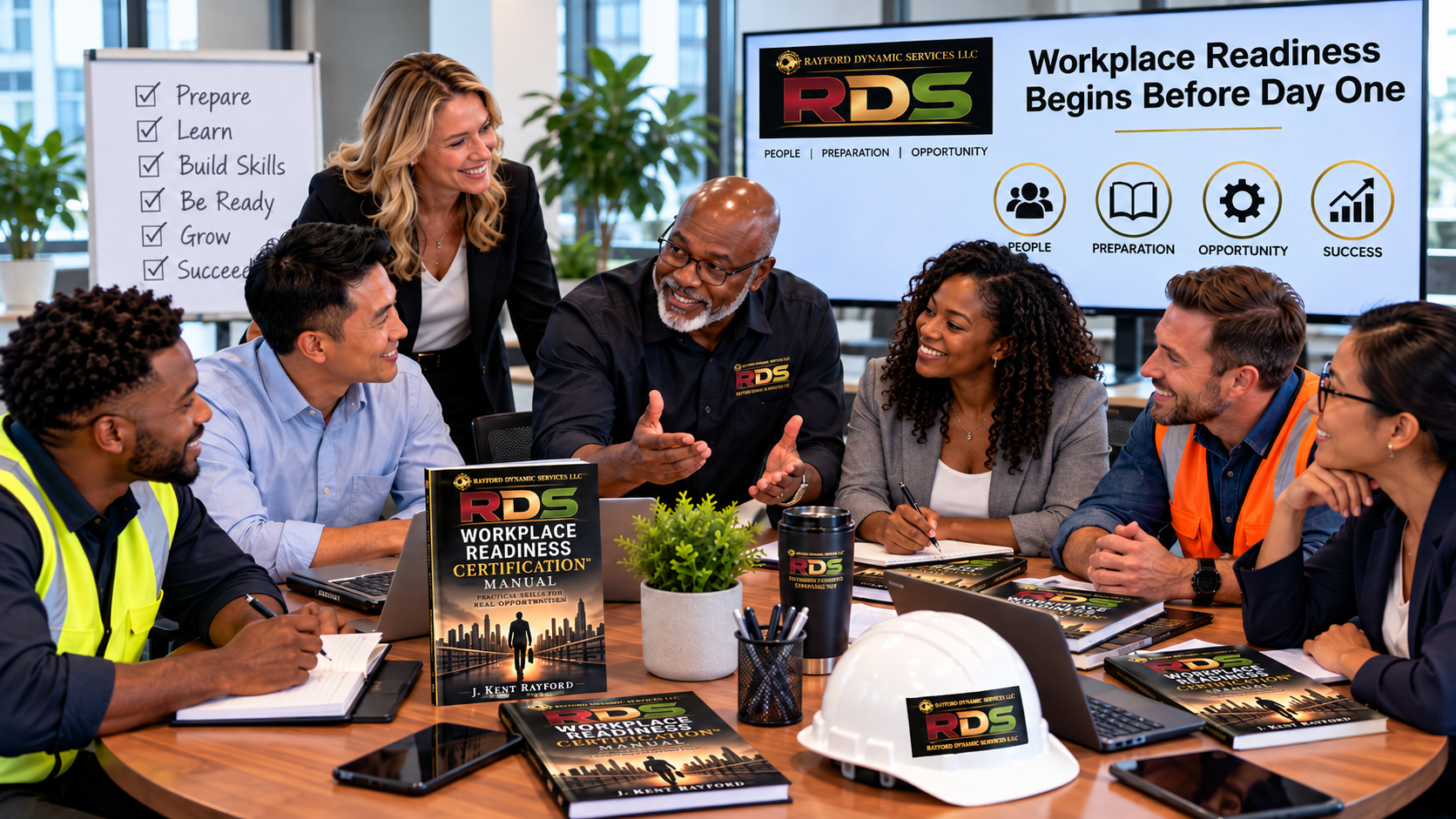
    Workplace Readiness Begins Before Day One

    Workplace readiness does not begin when someone walks through an employer’s door on the first day of work. It begins earlier—with an individual’s willingness to prepare, understand expectations, develop professional habits, and recognize what employers need from the people they hire.

    For individuals entering the workforce, changing jobs, or seeking advancement, preparation can influence how they interview, communicate, respond to supervision, work with others, manage responsibility, and adapt to workplace expectations. Technical ability may help someone qualify for an opportunity, but workplace behaviors often influence whether that opportunity becomes long-term success.

    Employers, staffing agencies, workforce organizations, municipalities, churches, and community partners also have a role in helping people understand workplace expectations before problems occur. Preparing individuals before Day One can support smoother onboarding, stronger integration, improved reliability, and better opportunities for retention and growth.

    This is the purpose behind the RDS Workplace Readiness initiative: to provide practical preparation for individuals who want to improve their chances of workplace success while giving employers and workforce partners another tool for developing people who are better prepared to contribute, adapt, and grow.

    Workplace readiness is ultimately a partnership between preparation and willingness. RDS can provide practical tools, guidance, training, and opportunities to learn—but lasting workplace success begins with individuals who are willing to prepare, contribute, adapt, and grow. That preparation should begin before Day One.